
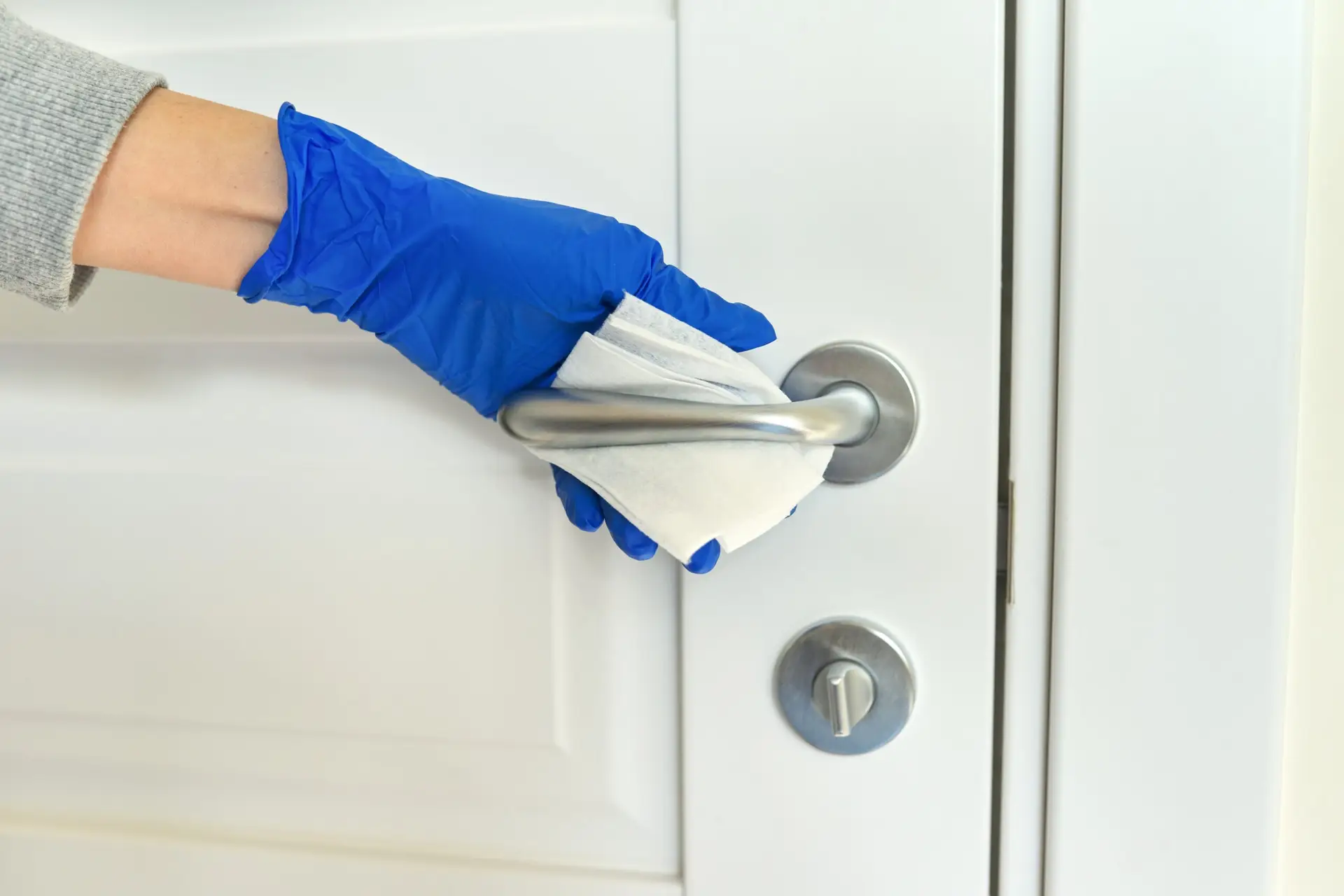
Brass door handles, knobs, and knockers add a classic, refined touch to any home. However, brass—an alloy primarily composed of copper ($\text{Cu}$) and zinc ($\text{Zn}$)—is susceptible to tarnishing over time. Successfully cleaning brass hardware requires understanding its material composition (solid vs. coated) and using the correct $\text{pH}$-balanced cleaning agents to restore its luster without causing permanent damage.
Why Brass Handles Tarnish
Tarnish is not just dirt; it is a chemical process that results in a dull, dark, and often greenish film forming on the metal’s surface.
Reaction to Air, Moisture, and Oils from Hands
Brass tarnishes through a natural process called oxidation. The copper component of the brass reacts with oxygen ($\text{O}_{2}$) and sulfur compounds in the air, creating a thin layer of copper sulfide that appears dark brown or black.
- Moisture: Humidity accelerates the oxidation process, making brass in coastal or highly humid environments tarnish faster.
- Oils and Acids: The natural oils, salts, and perspiration ($\text{NaCl}$) left behind by human hands are slightly acidic and chemically aggressive. On high-touch items like door handles, this residue constantly accelerates corrosion and tarnish formation.
Regular Cleaning Prevents Corrosion
While a dark tarnish, or “patina,” is often desirable for an antique look, unchecked tarnish can lead to irreversible issues. When tarnish is left to build up, it can eventually lead to pitting—tiny, permanent depressions in the metal’s surface. Regular, gentle cleaning removes the corrosive agents (salts, oils) and the early stages of oxidation, preserving the smooth, underlying metal.
How to Identify Solid vs Coated Brass
Before you begin cleaning, you must determine if your handle is solid brass or brass-plated (coated). The cleaning method for each is drastically different. If you use an abrasive cleaner or scrub a plated item too hard, you will permanently remove the thin brass coating, revealing the cheaper metal underneath.
The Magnet Test and Color Consistency
The easiest and most reliable non-destructive test involves a common household item: a magnet.
- The Magnet Test: Hold a simple refrigerator magnet up to the handle.
- Result A (Magnet sticks firmly): The hardware is brass-plated over a ferrous metal core (usually steel). Use only non-abrasive cloths and gentle, $\text{pH}$-neutral cleaners.
- Result B (Magnet does not stick or slides off): The hardware is solid brass. You can safely use mild abrasives and gentle acidic compounds to remove heavy tarnish.
- Visual Check (Flaking): Check the hardware in inconspicuous spots (like the backplate) for signs of wear. If you see silver or gray metal peeking through or if the brass finish is flaking off, the item is definitely plated and must be treated with extreme care.
Best Cleaning Methods
The chosen method depends on the severity of the tarnish and whether the brass is solid or plated.
Lemon Juice and Baking Soda for Natural Polishing
This method is highly effective for solid brass that is moderately tarnished. It uses the mild acid in lemon juice (citric acid, $\text{C}_{6}\text{H}_{8}\text{O}_{7}$) to dissolve tarnish, while baking soda ($\text{NaHCO}_{3}$) provides a gentle, non-scratching abrasive.
- Preparation: Mix a thick paste of $\text{1 part}$ baking soda and $\text{1 part}$ fresh lemon juice.
- Application: Using a clean, soft microfiber cloth, apply the paste directly to the handle.
- Gentle Rubbing: Rub the paste into the tarnished areas with a gentle, circular motion. You should see the dark tarnish lift onto the cloth quickly.
- Rinsing: Immediately rinse the handle thoroughly with warm water to neutralize the acid. Do not allow the paste to dry on the brass.
- Drying: Dry the hardware immediately and completely with a fresh, soft towel. Any residual moisture will promote immediate re-tarnishing.
Commercial Brass Cleaner for Stubborn Tarnish
For solid brass that has heavy, dark, neglected tarnish or for large jobs, a commercial brass polish (containing mild chemical abrasives) is often the fastest solution.
- Selection: Always choose a reputable, non-ammonia-based brass cleaner.
- Ventilation: Use these products only in a well-ventilated area, as the chemicals can be strong.
- Process: Follow the manufacturer’s directions exactly, often involving applying the polish with a cloth, allowing it to haze slightly, and buffing it off before it fully dries.
Polishing & Protection
The final and most crucial step is protecting the newly cleaned surface from the elements.
Apply Thin Coat of Mineral Oil or Wax
Once the brass is clean and dry, applying a protective barrier will significantly slow down the rate of future tarnishing. This clear coat creates a physical barrier between the metal surface and the corrosive elements in the air.
- Oil Method: Apply a very thin layer of mineral oil or olive oil using a lint-free cloth. Buff lightly until no sticky residue remains.
- Wax Method: Use a microcrystalline wax (like Renaissance Wax) or even carnauba wax. This provides a harder, longer-lasting barrier. Apply thinly, allow to dry for $\text{10 minutes}$, and buff to a sheen.
Avoid Harsh Scrubbing Pads
Whether you are cleaning solid or plated brass, never use steel wool, abrasive scouring pads, or stiff brushes. These materials will create irreversible scratches on the metal’s surface, destroying any patina or finish and creating more microscopic grooves where dirt and tarnish can accumulate faster. Always use soft cotton or microfiber cloths.
FAQs
Can I use vinegar on brass?
You can, but it is not the preferred initial solution. Vinegar (acetic acid, $\text{CH}_{3}\text{COOH}$) is a stronger acid than lemon juice and can potentially etch or strip a brass lacquer coating if left on too long. It should only be used as a last resort for heavily tarnished, unlacquered solid brass, and must be rinsed off immediately and thoroughly to prevent damage.
How often should I polish brass hardware?
The frequency depends entirely on the location and desired aesthetic:
- High-Touch Interior Handles: Polish every $\text{3}$ to $\text{6 months}$ to maintain a high shine and prevent pitting from hand oils.
- Exterior Handles/Knockers: Due to constant exposure to weather, these may require cleaning and re-protecting (waxing) quarterly.
- Items with a desired patina: If you prefer an aged, darker look, simply dust and wipe the handles with a damp cloth and warm water, avoiding polish altogether.
Maintaining beautiful brass hardware requires precision and the right products. If you have an entire home or commercial property with specialized hardware that needs professional care, trust the experts.
Contact Tammy’s Crew Cleaning today for detailed, protective cleaning services that restore the luster of your finest fixtures!