
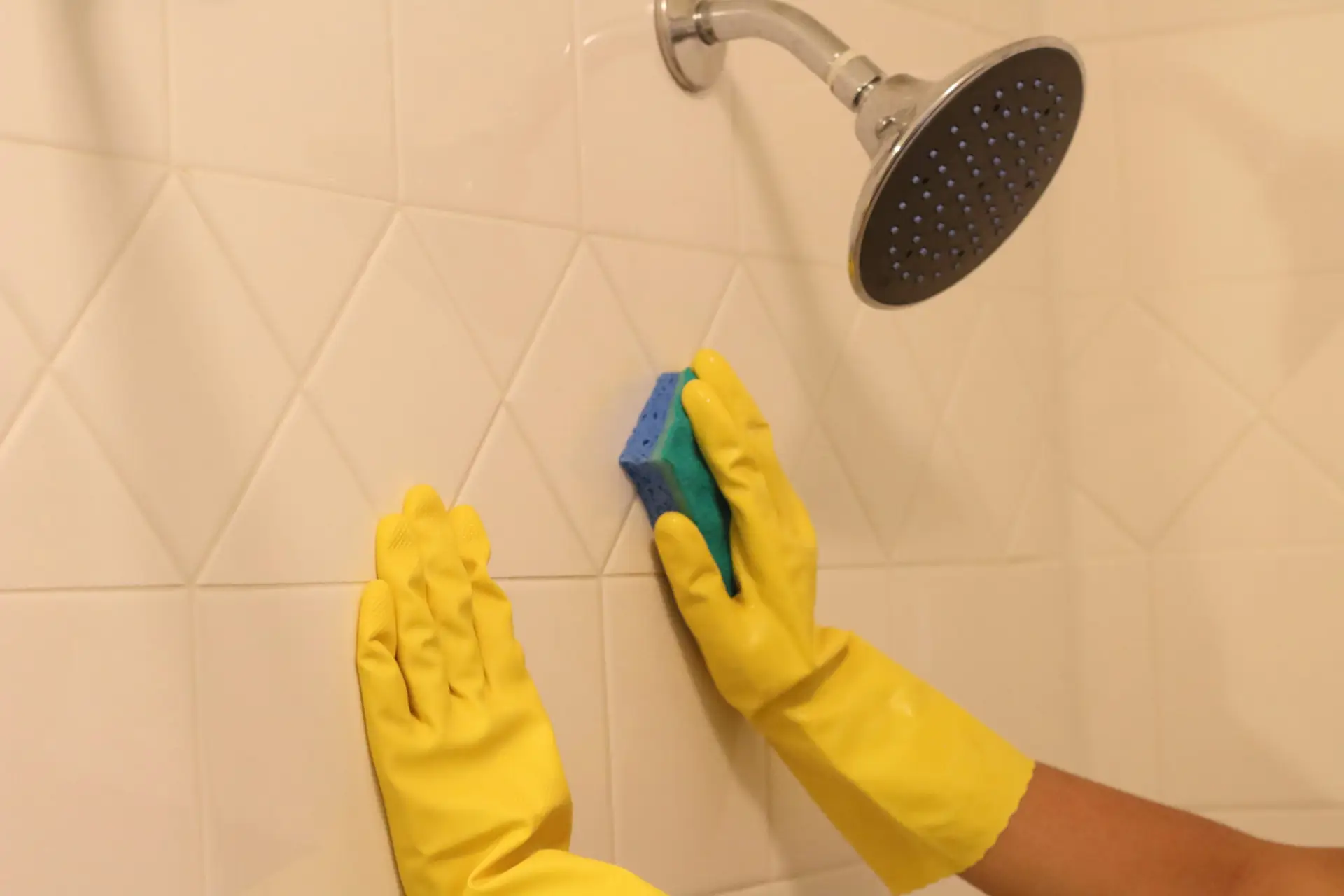
While powerful chemical cleaners certainly have their place, many homeowners prefer non-toxic, all-natural methods for routine cleaning, especially in high-moisture environments like showers. The combination of baking soda (sodium bicarbonate) and white vinegar (acetic acid) is a cost-effective, incredibly versatile, and highly effective duo that safely tackles soap scum, hard water stains, and mildew without introducing harsh fumes into your home.
Why Baking Soda and Vinegar Work
Baking soda and vinegar are two common pantry staples that become cleaning powerhouses when combined, relying on simple chemistry to break down grime.
Natural Disinfectant and Deodorizing Properties
This DIY combination works by employing both chemical reaction and mechanical action:
- Vinegar (Acetic Acid): As a mild acid, vinegar is highly effective at dissolving mineral deposits left by hard water (limescale) and the chalky white residue from soap scum. It is also a powerful, natural disinfectant proven to kill many types of mold, mildew, and common household bacteria.
- Baking Soda (Mild Alkali): Baking soda is a gentle, natural abrasive. Its fine crystalline structure provides the necessary grit to scrub away surface dirt without scratching soft materials like fiberglass or glass. Furthermore, baking soda is an excellent deodorizer, absorbing and neutralizing odors instead of just masking them.
Safe for Tile, Glass, and Fiberglass Surfaces
The gentle nature and balanced chemistry of these ingredients make them safe for most standard bathroom materials:
- Ceramic Tile and Porcelain: Both surfaces are durable and handle the mild acid and gentle abrasive perfectly.
- Fiberglass and Acrylic: Unlike harsh powders that scratch the gel coat, baking soda paste safely lifts grime, preserving the glossy finish.
- Glass Shower Doors: Vinegar is a superior, streak-free cleaner for glass, tackling the mineral buildup that makes glass look foggy.
How to Clean Your Shower Step-by-Step
Follow these steps for a complete, natural deep clean of your shower enclosure.
Mix Equal Parts Vinegar and Water in a Spray Bottle
For general cleaning and maintenance, dilution is often the best approach to ensure safety on all surfaces and to make the vinegar last longer.
- Dilution: Combine $\text{1 cup}$ of warm white vinegar with $\text{1 cup}$ of water in a standard spray bottle. A few drops of your favorite essential oil (like tea tree or lemon) can be added to boost scent and germ-fighting properties.
- Application: Spray this diluted solution liberally over all shower surfaces: the walls, the tub base, fixtures, and especially the glass doors.
Sprinkle Baking Soda on Tough Stains
For areas with heavy soap scum, significant grime, or mildew spots that need extra attention, baking soda is your pre-treatment step.
- Targeting Buildup: Instead of mixing the paste beforehand, first spray the vinegar solution on the tough area.
- Application: Immediately sprinkle dry baking soda generously over the wet, stained area (e.g., in the corners, around the drain, or along a heavily soiled grout line). The reaction will start immediately, creating a foam.
Spray, Let Sit, and Scrub with a Soft Brush
The dwell time is crucial—it allows the acidic vinegar to break down minerals while the baking soda starts to lift the physical grime.
- Dwell Time: Let the solution sit and work its magic for $\text{5 to 15 minutes}$. For particularly stubborn areas, you may let the paste sit for up to $30$ minutes.
- Scrubbing: Use a soft-bristled brush, a non-scratch scrubber pad, or a soft sponge to scrub the surfaces. Focus particularly on the areas where the baking soda paste was applied.
- Rinse: Finish by rinsing the entire shower thoroughly with warm water, ensuring all residue is washed down the drain.
What to Avoid
While baking soda and vinegar are safe for most common materials, they have two important limitations that you must respect for both material safety and personal safety.
Using on Marble or Natural Stone
Critical Warning: Never use vinegar or any other acidic cleaner (like lemon juice) on natural stone surfaces, including marble, granite, or travertine.
- The Reaction: Natural stone contains calcium carbonate, which reacts chemically with the acetic acid in vinegar. This reaction causes the stone to become “etched”—a process that leaves dull, permanent marks on the stone’s polished finish.
- Safe Alternatives: For natural stone, use cleaners specifically labeled as “pH neutral” or stick to a simple mixture of mild dish soap and water.
Mixing with Bleach or Ammonia-Based Cleaners
Critical Safety Warning: Never, under any circumstances, combine vinegar with chlorine bleach or any product containing ammonia (like some glass cleaners).
- Vinegar + Bleach: Creates highly toxic chlorine gas ($\text{Cl}_{2}$), which can cause severe respiratory damage or even be fatal.
- Vinegar + Ammonia: Creates toxic chloramine vapors ($\text{NH}_{2}\text{Cl}$), which cause severe lung irritation.
Maintenance Routine
Consistency is the most important factor in keeping your shower clean. A regular, short routine is far more effective than an occasional marathon cleaning session.
Repeat Weekly to Prevent Soap Scum Buildup
By dedicating $\text{5 to 10 minutes}$ once a week to apply the diluted vinegar spray and perform a light wipe down, you will drastically minimize the amount of time and effort needed for deep cleaning. This prevents the soap scum from fully adhering and hardening on the surfaces.
Dry Surfaces After Each Use to Reduce Mildew
Mildew thrives in dark, humid environments. Breaking the moisture cycle is the easiest way to prevent mildew and mold growth.
- Squeegee or Towel: Keep a squeegee or a dedicated shower towel handy and quickly wipe down the walls and glass doors immediately after showering.
- Ventilation: Always run the bathroom fan during and for at least $\text{20 minutes}$ after your shower to reduce the ambient humidity level.
FAQs
Does vinegar damage grout?
No, diluted vinegar generally does not damage the grout itself, as most modern grout is cement-based and very durable. However, the mild acid can potentially strip or break down the sealant that was applied to the grout, making it more porous over time. For best results:
- Use vinegar diluted $1:1$ with water.
- Avoid leaving the solution on the grout for more than $\text{15 minutes}$.
- Rinse thoroughly to remove all acidic residue.
Can I use this method on glass shower doors?
Absolutely, this method is one of the best ways to clean glass shower doors! The acetic acid in the vinegar is superb at dissolving the mineral deposits and water spots that often cloud the glass. For an extra boost, warm the vinegar slightly before mixing with water (do not boil) to increase its efficiency against tough hard water stains.
Does this DIY project sound like too much work, or do you have materials like marble that require specialized care?
Let the professionals handle it! Tammy’s Crew Cleaning uses safe, effective, and material-specific products to ensure your entire bathroom is flawlessly clean without any risk of damage. Save your time and protect your home investment.
Contact Tammy’s Crew Cleaning today for your free, customized cleaning estimate!