
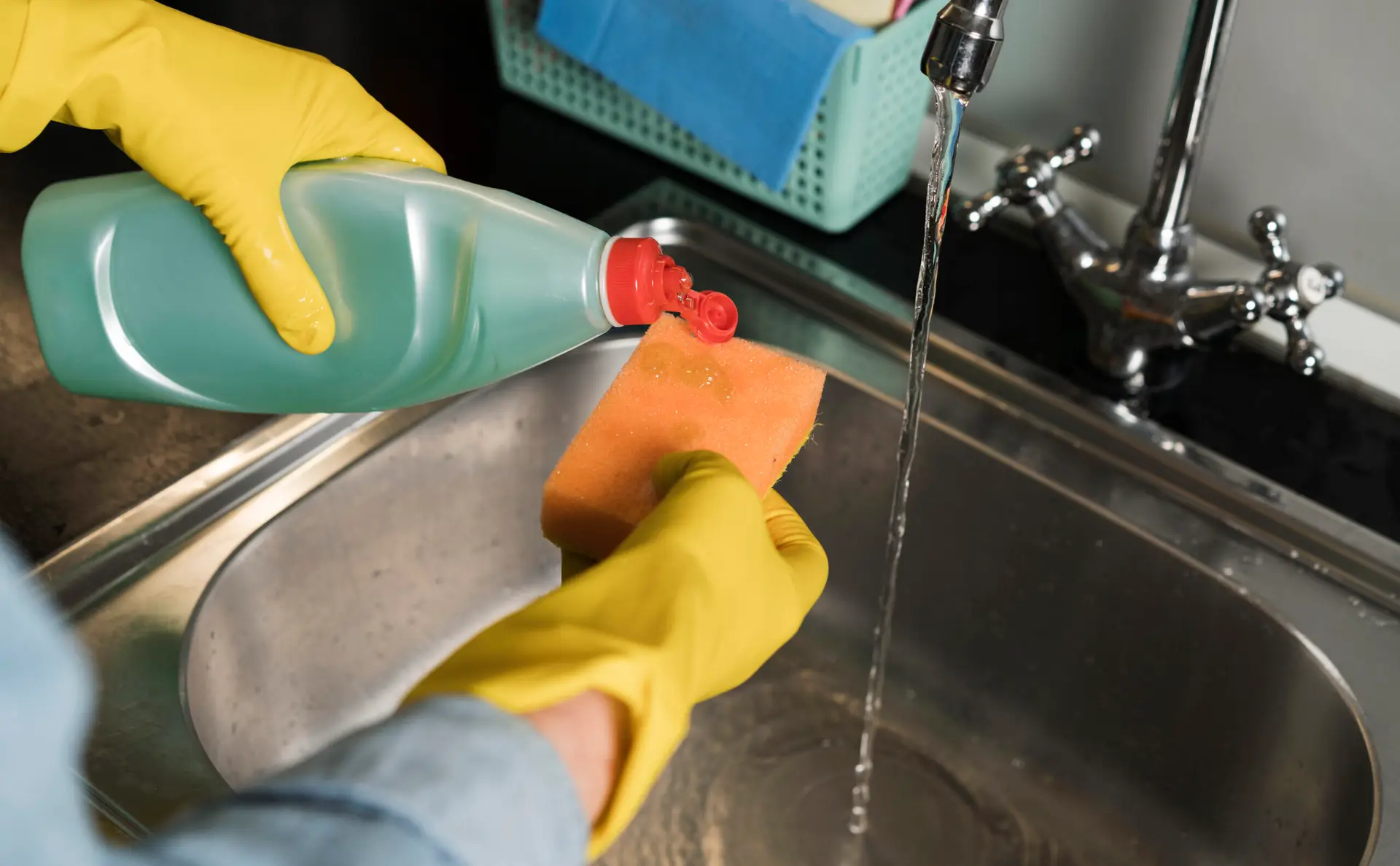
The short answer is a definitive no. While it might seem convenient to grab the strongest cleaner for a dirty sink, toilet bowl cleaners are specifically formulated for the porous, durable, and unique surfaces found inside a toilet bowl. They are far too powerful for the delicate finishes, plumbing, and materials commonly used in kitchen and bathroom sinks. Using them outside the intended fixture can cause permanent, expensive damage.
Why Toilet Bowl Cleaners Are Too Harsh
Toilet bowl cleaners rely on highly concentrated, aggressive chemicals to break down mineral deposits, rust rings, and bio-waste efficiently. These chemicals, primarily strong acids, interact poorly with common sink materials.
Contain Acids That Can Damage Sink Finishes
Most commercial toilet bowl cleaners contain powerful mineral acids, often hydrochloric acid ($\text{HCl}$) or sulfuric acid ($\text{H}_{2}\text{SO}_{4}$). These acids are necessary to quickly dissolve heavy calcium and limescale buildup in the porcelain bowl, which is a very tough material.
However, sink finishes are much more vulnerable:
- Porcelain and Enamel Sinks: Although they have a glass-like finish, the glaze on sinks is thinner than a toilet bowl’s ceramic body. Strong acids can permanently dull, etch, or even dissolve the top layer of this glaze, creating a rough, dull surface that is impossible to restore and will stain more easily in the future.
- Stainless Steel Sinks: Stainless steel relies on a microscopic chromium oxide layer for corrosion resistance. Bleach, ammonia, and strong acids found in toilet cleaners rapidly degrade this layer, leading to visible pitting, dark spots, and immediate rust (oxidation).
- Acrylic and Composite Sinks: These synthetic materials are prone to severe chemical burns, discoloration, and softening when exposed to concentrated acids.
Corrosive Effects on Pipes and Sealants
When a sink is used, water drains through a series of traps, seals, and plumbing fixtures that are much more complex and less durable than the simple drain in a toilet.
- Plumbing Damage: The concentrated acidic nature of toilet cleaner can slowly erode metal drain parts, chrome finishes on the drain plug and overflow assembly, and, critically, the rubber gaskets and seals inside the P-trap. Erosion of these seals can lead to leaks, requiring immediate plumbing repair.
- Fume Hazard: When poured down a sink drain, the acids react with any residue present in the trap, often releasing intense, corrosive fumes (gases) into the air of your kitchen or bathroom. Since a sink is close to face level, this increases the risk of respiratory and eye irritation.
Safe Alternatives for Sink Cleaning
The safest and most effective strategy for sinks is to use gentler cleaners that are appropriate for the material and plumbing.
Mild Dish Soap and Baking Soda Mix
This simple, dual-action solution is perfect for daily and weekly cleaning, offering both degreasing power and light, non-scratch abrasion.
- Dish Soap: Effective for breaking down the oily film left by soap, makeup, toothpaste, and food grease. It is pH-neutral and safe for all finishes.
- Baking Soda ($\text{NaHCO}_{3}$): When damp, baking soda provides a very fine, gentle scrub that lifts stubborn grime and acts as a powerful deodorizer without scratching the finish or damaging the plumbing.
Non-Acidic Bathroom or All-Purpose Cleaners
For sanitization, select an all-purpose cleaner that is explicitly labeled as non-acidic and bleach-free.
- Look for cleaners that use hydrogen peroxide ($\text{H}_{2}\text{O}_{2}$) or quaternary ammonium compounds (quats) as sanitizing agents. These are effective against bacteria and viruses without the damaging corrosive effects of strong acids or chlorine.
- Always check the label to ensure the product is safe for the specific material of your sink (e.g., “safe for acrylic” or “safe for stainless steel”).
How to Remove Tough Sink Stains Safely
When a simple wipe-down isn’t enough, you can employ targeted, yet safe, DIY solutions.
Use Vinegar and Water Solution (Ceramic/Porcelain Only)
For hard water stains, limescale, or light discoloration on ceramic or porcelain sinks (do not use on natural stone or unsealed grout), white vinegar is an excellent solution.
- Solution: Mix white vinegar and water in a $1:1$ ratio in a spray bottle.
- Application: Spray liberally over the hard water spots. Let it sit for $\text{5 to 10 minutes}$ to allow the mild acetic acid to dissolve the minerals.
- Rinsing: Scrub lightly with a sponge, then rinse completely with warm water to prevent the mild acid from etching the finish over time.
For Stainless Steel – Baking Soda and Soft Sponge
To remove stains and restore the luster of a stainless steel sink without risking scratches or corrosion:
- Preparation: Make a thin paste of baking soda and water.
- Technique: Apply the paste to a soft, clean sponge or microfiber cloth.
- Crucial Step: Always scrub gently in the direction of the metal’s grain (the microscopic lines on the surface). Scrubbing against the grain creates visible scratches.
- Finish: Rinse immediately and dry completely with a clean towel to prevent water spots.
Best Practices for Sink Maintenance
Adopting a few simple maintenance habits will drastically reduce the need for deep cleaning and the temptation to reach for harsh chemicals.
Rinse Thoroughly After Using Any Cleaner
No matter what product you use—even mild dish soap—thorough rinsing is non-negotiable.
- Preventing Residue: Any cleaning chemical left on the surface, no matter how gentle, will concentrate as the water evaporates. This creates a sticky film that attracts dirt or, in the case of mild acids (like vinegar), prolongs contact time, potentially leading to etching.
- Wiping Dry: After rinsing, always wipe down the sink basin and faucet with a dry cloth. This prevents hard water spots and removes the standing moisture that is essential for mildew and water stain formation.
Avoid Cross-Contamination with Toilet Products
For hygiene and safety, never use the same tools in your sink that you use in your toilet.
- Dedicated Tools: Keep separate sponges, rags, and brushes specifically labeled for the toilet area.
- Chemical Spills: Ensure toilet cleaners are stored far away from sink-appropriate products to prevent accidental mixing, especially the dangerous combination of ammonia and bleach or acids and bleach.
FAQs
What happens if I accidentally used it once?
If you immediately realized your mistake and rinsed the sink thoroughly with large amounts of cold water, you likely averted major damage. The danger comes from the chemical having long-term contact (more than a few minutes) with the surface or the piping.
Immediate steps to take if this happens:
- Rinse the area with cold water for $\text{2 to 3 minutes}$.
- Neutralize the surface by wiping it with a very mild solution of baking soda and water.
- Rinse again and dry the entire sink surface completely.
Are natural cleaners effective for sinks?
Yes, absolutely. For everyday grime, deodorizing, and light sanitization, natural cleaners like dish soap, baking soda, and vinegar are highly effective.
- They are powerful enough to handle daily soil, grease, and light water spots.
- They are safer for your plumbing and much safer for prolonged skin contact.
- The only time a natural cleaner might fail is against severe rust or deep, set-in mold, which may require a targeted commercial product designed for that specific stain type.
Don’t risk the investment you’ve made in your home’s fixtures by using the wrong chemicals. Protect your porcelain, stainless steel, and plumbing by sticking to safe, pH-neutral, and non-abrasive products.
Need help removing tough stains that require specialized care, or want to ensure every surface in your bathroom gets the professional attention it deserves?
Contact Tammy’s Crew Cleaning today for a comprehensive, damage-free cleaning service!