
Pet hair removal can feel like a never-ending chore, but it doesn’t have to be. By understanding why hair sticks and employing a combination of specific tools and laundry techniques, you can keep your clothes looking fresh and fur-free.
Why Pet Hair Sticks to Clothing
Understanding the science behind the stickiness helps you choose the right removal method.
Static Cling and Fabric Type
The primary culprit for stubborn hair is static electricity. When your clothes rub against pet fur (or against themselves in the dryer), friction generates static charge.
- Static Cling: This charge creates a magnetic attraction between the oppositely charged hair and fabric fibers, causing the hair to cling tightly.
- Fabric Type: Synthetic fabrics (like polyester, nylon, and acrylic) are major static generators and tend to hold onto hair much more tightly than natural fibers like cotton or silk. Textures like fleece and corduroy also trap hair deep within their weave.
How Humidity Affects Buildup
Humidity plays a large role in managing static and hair cling.
- Low Humidity: In dry environments (especially during winter or when the $\text{HVAC}$ is running), static electricity is more easily generated and less easily dissipated, leading to maximum cling.
- High Humidity: Moisture in the air helps neutralize static charges, which is why slightly damp hands or dryer sheets are effective tools for removal.
Best Tools for Hair Removal
The fastest removal is usually achieved using friction or adhesion tools before washing.
Lint Rollers, Rubber Gloves, and Dryer Sheets
| Tool | Usage Method | Best For |
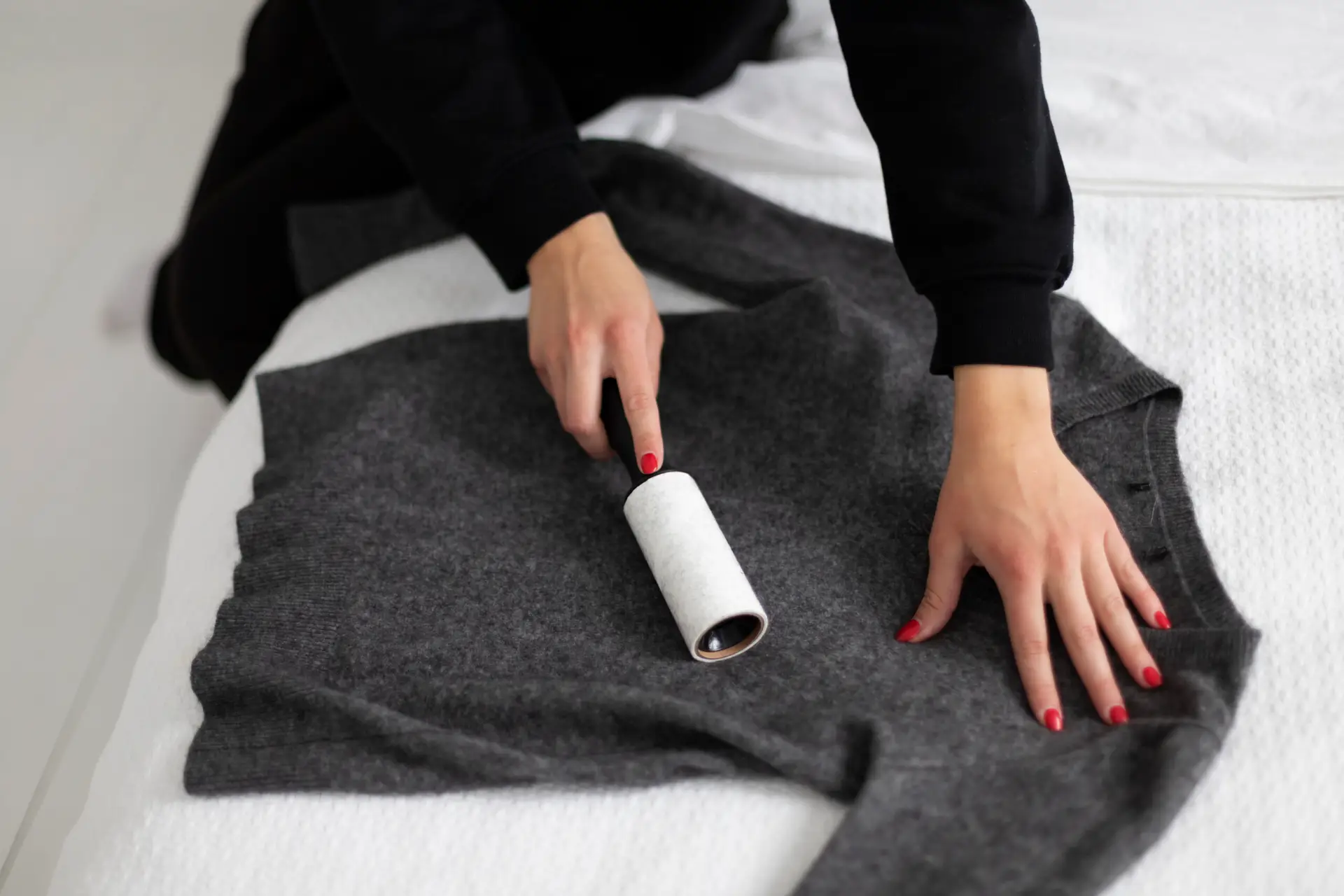
| Lint Rollers | Roll directly over the garment surface. | Quick, on-the-go fixes and surfaces with loose hair. |
| Rubber Gloves | Dampen the glove and rub the clothing in one direction. The friction balls the hair up. | Heavily furred items like jackets or furniture upholstery. |
| Used Dryer Sheets | Rub the sheet over the garment surface. | Utilizing the anti-static properties to neutralize cling and loosen fine hairs. |
Fabric Brushes and Anti-Static Sprays
- Fabric Brushes: These typically have a directional napped surface (often red felt or velvet). They lift hair when brushed in one direction and require a dedicated cleaning surface to remove the collected hair before the next use. Best for removing embedded hair from thick fabrics.
- Anti-Static Sprays: A light mist of a commercial anti-static spray or a homemade mixture of water and fabric softener helps neutralize the static charge, allowing the hair to drop off the garment easily.
Washing & Drying Tips
The laundry process can either set the hair or remove it efficiently; it’s all about timing and additives.
Use Dryer First to Loosen Fur Before Washing
Before placing clothes in the washer, toss them into the dryer on a low-heat or no-heat setting for $\text{10}$ to $\text{15}$ minutes.
- Tumbling Action: The tumbling action works to dislodge the hair from the fabric fibers.
- Lint Trap: The loosened hair is then captured by the dryer’s lint trap. Remember to clean the lint trap immediately afterward to prevent hair from transferring back onto the next load.
- Washing Precaution: If you skip this step, the washing machine can sometimes cause the hair to weave deeper into the fabric and clog the washing machine drain.
Add White Vinegar to Reduce Static
When washing the clothes, use the following tips:
- Tumbling Additives: During the wash cycle, add a half-cup ($\text{120}$ ml) of white distilled vinegar ($\text{CH}_{3}\text{COOH}$) to the rinse cycle. Vinegar acts as a natural fabric softener, relaxing the fibers and reducing the static cling that keeps the hair locked in place.
- Air Dry Before Final Dry: If you plan to fully dry the items in the machine, check them first. Items that still have residual hair should be taken out and treated with a damp cloth or lint roller before being put back into the dryer for the final dry cycle.
Preventing Pet Hair on Clothes
The best strategy is always proactive prevention.
Groom Pets Regularly and Wash Bedding Weekly
- Daily Brushing: Regular brushing and grooming of your pet will significantly reduce the amount of loose hair they shed onto your environment.
- Dedicated Areas: Wash your pet’s beds, blankets, and furniture covers weekly to prevent them from becoming reservoirs of hair that can contaminate your clothing.
Choose Clothing Fabrics That Repel Hair
When purchasing new clothing, choose fabrics that inherently repel hair or are easier to clean:
- Hair-Repelling Fabrics: Smooth, tight-weave fabrics like silk, denim, and patent leather are less prone to trapping hair.
- Avoid: Steer clear of textured or highly static fabrics like velvet, fleece, and corduroy, which act like magnets and brushes, locking hair into their texture.
FAQs
Can I use the dryer without heat to remove pet hair?
Yes, the dryer on a no-heat (air-fluff) setting for $\text{10}$ to $\text{15}$ minutes is one of the most effective first steps. The absence of heat prevents the hair proteins from bonding tightly to synthetic fibers, while the tumbling action loosens the hair for collection in the lint trap.
Do anti-static sprays really work?
Absolutely. Anti-static sprays work by introducing conductive, moisture-rich particles onto the fabric surface, which rapidly equalizes the positive and negative charges. Once the static cling is neutralized, the hair is no longer magnetically attracted to the clothing and can be easily brushed or shaken off.