
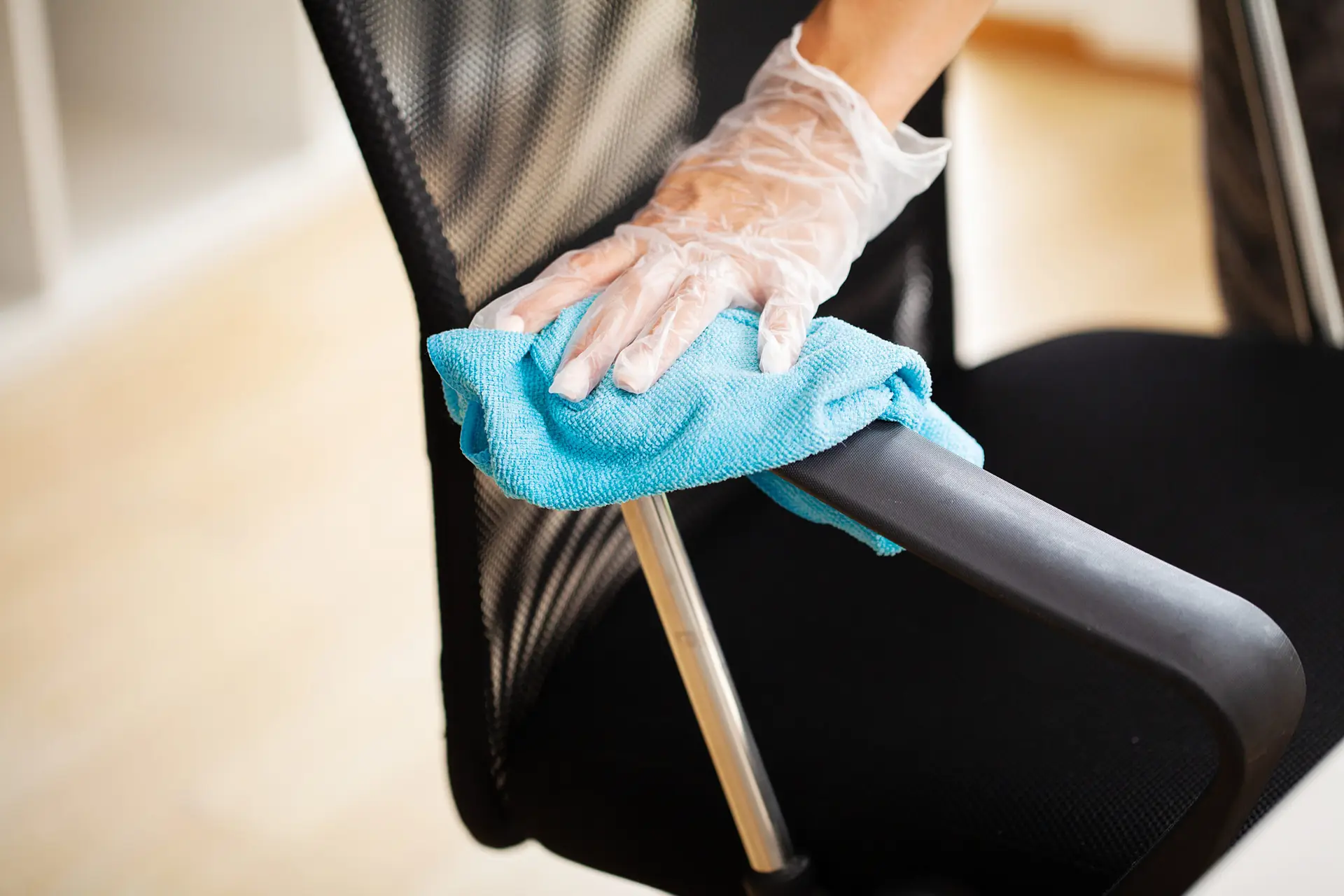
A clean office chair is vital for a healthy, productive workspace. Over time, chairs accumulate dust, skin cells, food crumbs, and oils from hands and hair. The cleaning process varies significantly depending on the material, but a consistent routine will ensure your investment lasts longer and remains comfortable.
Why Regular Cleaning Matters
Neglecting your office chair can lead to several preventable issues, impacting both its function and hygiene.
Extends Chair Lifespan and Improves Hygiene
Dust, dirt, and body oils are abrasive. When ground into the fabric or leather, they act like sandpaper, accelerating wear and tear. Regular cleaning removes these abrasive elements. Furthermore, a chair that is regularly used (8 hours a day, 5 days a week) can harbor bacteria and microorganisms; cleaning and sanitizing them improves the overall hygiene of your personal workspace.
Prevents Odor and Dust Buildup in Fabrics
Fabric and foam are highly porous and naturally absorb perspiration and environmental odors. Dust mites and allergens thrive in uncleaned upholstery. Routine vacuuming and targeted deep cleaning prevent organic matter from decomposing and smelling, while minimizing the buildup of common allergens.
Cleaning by Material Type
The key to cleaning an office chair successfully is matching the cleaning agent to the upholstery material.
Fabric – Vacuum, Mild Detergent, and Spot Cleaning
Fabric upholstery (like woven cloth or microfiber) is the most common and often the easiest to clean, but requires careful drying.
- Vacuuming: Use a $\text{HEPA}$ vacuum with an upholstery attachment to thoroughly vacuum the entire chair, focusing on seams, corners, and areas where the seat meets the backrest.
- Spot Cleaning: Mix a mild detergent (like dish soap) with water in a $\text{1:10}$ ratio. Lightly dampen a soft cloth with the solution and dab any visible spots or stains. Avoid saturating the fabric.
- Rinsing: Use a second cloth dampened only with clean water to wipe the area and lift the soap residue.
Leather – Use Conditioner and Soft Cloth
Leather requires special care, as abrasive cleaners or excess moisture can cause cracking or fading.
- Dusting: Wipe the surface with a dry, soft microfiber cloth to remove surface dust.
- Cleaning: Use a dedicated leather cleaner or a very mild soap solution. Apply the cleaner to a cloth first, then wipe the leather gently.
- Conditioning: After cleaning, it is essential to apply a leather conditioner. This replaces the natural oils lost during cleaning, keeping the leather supple and preventing it from drying out and cracking over time.
Mesh – Lint Roller and Compressed Air
Mesh chairs are popular for their breathability, but their porous structure can trap skin flakes and dust inside the weave.
- Lint Roll: Use a standard lint roller on the front of the seat and backrest to pull out embedded hair and lint.
- Compressed Air: Use a can of compressed air to blow stubborn dust and debris out of the weave, particularly where the mesh meets the plastic or metal frame.
- Wipe Down: Use a cloth very lightly dampened with mild soap and water to wipe the mesh. Ensure the cloth is barely wet so the water does not drip down into the mechanics of the chair.
Removing Stains and Odors
For deeper cleaning, you need a solution that neutralizes odors without damaging the material.
Use Vinegar-Water Solution for Deep Cleaning
A diluted white vinegar ($\text{CH}_{3}\text{COOH}$) solution works as a gentle, natural deodorizer and disinfectant, making it ideal for deep cleaning.
- Preparation: Mix white vinegar and water in a $\text{1:1}$ ratio in a spray bottle.
- Application: Lightly mist the fabric or mesh surface (do not spray leather).
- Dwell Time: Let the solution sit for $\text{5}$ to $\text{10}$ minutes to break down odors.
- Wipe: Use a clean, dry microfiber cloth to wipe the surface and absorb any excess moisture. The vinegar smell will dissipate as it dries.
Let Air Dry Completely Before Use
Moisture is the number one enemy of office chair components, leading to mold, mildew, and rust on internal metal parts. After any damp cleaning or stain removal, ensure the chair is completely dry.
- Position the chair in a well-ventilated area.
- Allow at least $\text{4}$ to $\text{6}$ hours of drying time.
- If possible, use a fan to circulate air around the chair to speed up the drying process before sitting on it.
Maintenance Routine
Consistency is key to keeping your chair in top condition, covering both upholstery and mechanical components.
Weekly Dusting and Monthly Deep Cleaning
Establish a schedule to manage the daily buildup of debris:
- Weekly: Perform a quick wipe-down of all hard surfaces (arms, base, controls) with an antibacterial wipe and a rapid vacuum of the seat surface.
- Monthly: Perform the full cleaning routine relevant to your chair’s material (fabric, leather, or mesh), including spot treating.
Lubricate Moving Parts When Needed
The mechanisms that allow your chair to swivel, tilt, and adjust height also require occasional maintenance.
- Squeaks: If the chair starts squeaking or adjustments feel stiff, turn the chair upside down.
- Lubrication: Apply a silicone-based lubricant or $\text{WD-40}$ to the pivot points, tension springs, and the gas cylinder connection points. Avoid using grease, as it attracts dirt.
FAQs
Can I steam clean an office chair?
Steam cleaning can be highly effective for sanitizing fabric or mesh chairs, but only if the chair is designed to handle it and you use low-moisture settings. Never steam clean leather as the heat and moisture will rapidly dry out the natural oils, leading to immediate cracking and deterioration.
What’s the best cleaner for mesh fabric?
The best approach for mesh is non-liquid cleaning first. Compressed air and a lint roller work best for dust and debris. For residue and odors, a mild, diluted soap or the vinegar-water solution is best, applied with a cloth that is barely damp. Avoid heavy soaps or commercial upholstery cleaners that can leave a sticky residue in the porous mesh weave.