
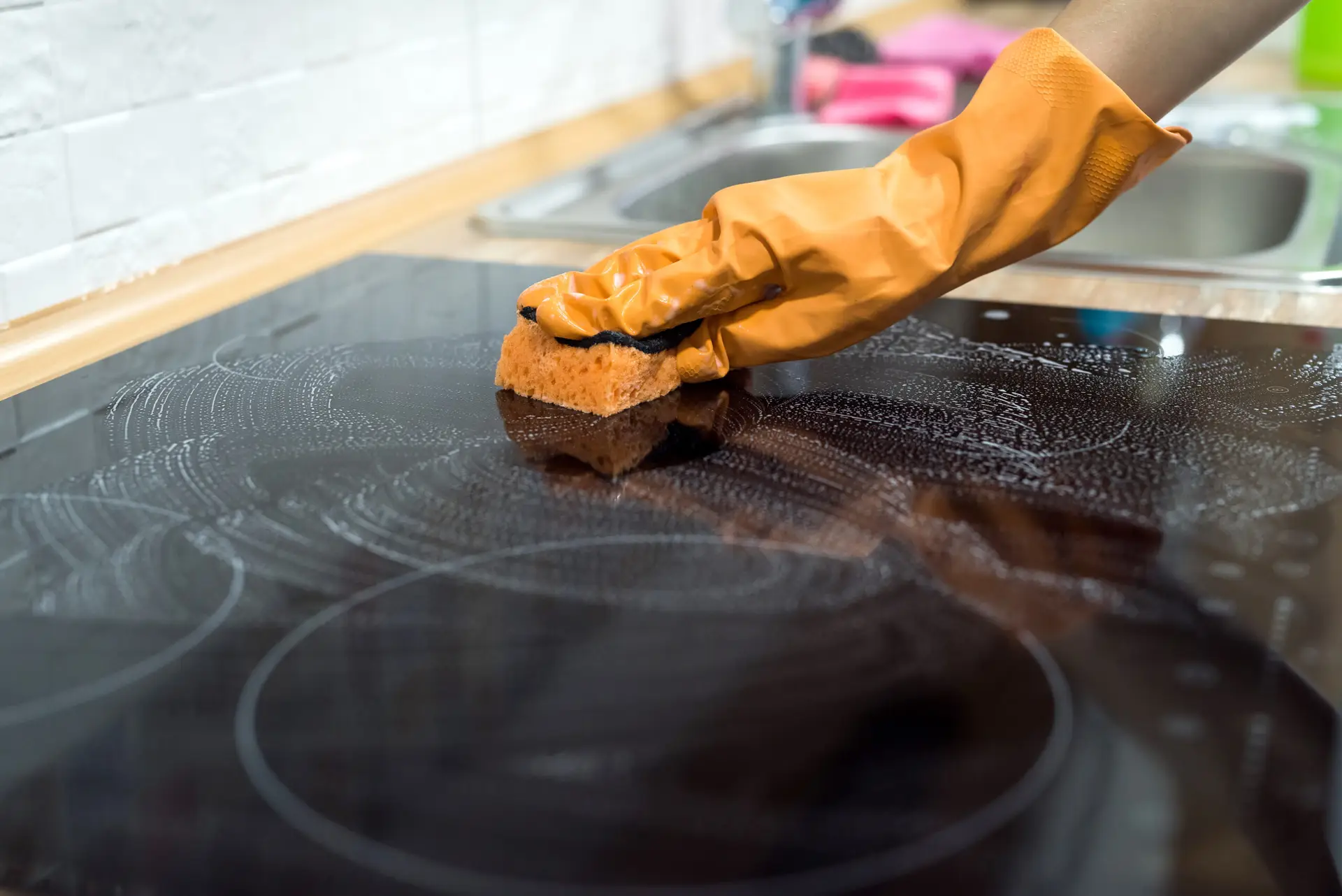
It’s a common dilemma: you’ve just finished a deep clean of your oven, and now you’re staring at a greasy, crusty stove top. The heavy-duty oven cleaner is right there, already open. It cuts through tough grime in the oven, so why not on the stove?
While the temptation is understandable—after all, it’s the same general appliance—the short answer is a definitive no. Using oven cleaner on your stove top, especially on surfaces like stainless steel, glass, or enamel, is a major risk that can lead to permanent damage, void warranties, and even create a safety hazard.
As professional cleaning experts, we want to walk you through exactly why this powerful chemical is a terrible idea for your stove top and, more importantly, what safe and effective alternatives you should be using instead.
Why Oven Cleaner Isn’t Always Safe
Oven cleaners are formulated for a specific, harsh environment: the inside of an oven. The materials used inside an oven are built to withstand high heat and concentrated, corrosive chemicals. Stove tops, however, are made with different materials that are far more sensitive.
Harsh Chemicals in Oven Cleaners
The secret to an oven cleaner’s extreme effectiveness is also its biggest drawback: highly alkaline, corrosive chemicals. The primary active ingredient in many traditional oven cleaners is lye (also known as sodium hydroxide or potassium hydroxide).
This chemical is what creates the high pH environment needed to saponify (turn into soap) baked-on grease and carbon deposits. This extreme power, however, is too much for your stove top. The corrosive nature of lye means it doesn’t just dissolve grime; it can literally eat away at less resistant surfaces.
Risks to Enamel, Glass, and Stainless Steel
Using a caustic oven cleaner on your stove top introduces a significant risk of permanent cosmetic and structural damage, depending on the material:
- Glass and Ceramic Stove Tops: The lye in the cleaner can etch and scratch the smooth glass surface. More dangerously, if the residue is not perfectly removed, the chemical can pitting the glass when the surface heats up, weakening it and potentially leading to cracks. It will also leave behind unsightly, permanent streaks or dull spots.
- Stainless Steel: Oven cleaner will cause irreversible discoloration and oxidation on stainless steel. It leaves behind a yellowish or brownish haze that is impossible to buff out. It also compromises the protective finish of the steel, making it prone to rust and future staining.
- Enameled Surfaces: Many gas stove tops have enameled grates or drip pans. Oven cleaner can permanently dull the shine of the enamel and even cause the protective coating to peel, exposing the underlying metal to corrosion.
Safer Alternatives for Stove Top Cleaning
The key to a clean stove top is using the right cleaner for the right soil. For stove tops, you need a solution that is tough on grease but gentle on the finish. Forget the harsh chemicals and rely on these proven, safer methods.
Baking Soda Paste for Burnt-On Food
For those crusty, baked-on spills and rings that seem impossible to budge, turn to a classic, non-toxic solution: baking soda.
How to Use:
- Mix 21 cup of baking soda with a few tablespoons of water to create a thick, spreadable paste.
- Spread the paste over the affected area, ensuring the entire stain is covered.
- Let the paste sit for at least 30 minutes (or 1 hour for heavy grime). The baking soda will gently lift and loosen the carbon and grease.
- Gently scrub with a non-abrasive sponge or micro-fiber cloth. Rinse clean with a damp cloth.
Vinegar Spray for Grease
Vinegar is a phenomenal natural degreaser and mild disinfectant. While it won’t cut through heavy carbon crusts, it is perfect for daily wipe-downs and light to moderate grease build-up.
How to Use:
- Mix equal parts white vinegar and water in a spray bottle (50% vinegar, 50% water).
- Spray the entire stove top surface.
- Let it sit for about 5 to 10 minutes to allow the mild acidity to break down the grease.
- Wipe clean with a lint-free cloth or paper towel.
Stove-Top Specific Cleaning Products
The safest and often most effective route is to use cleaning products specifically manufactured for your stove top’s material.
- Glass/Ceramic Cleaners: These are formulated to clean the surface without leaving streaks or micro-scratches. They often contain a mild silicone or polymer that leaves a protective barrier.
- Stainless Steel Polish/Cleaner: These products are essential for stainless steel. They clean without stripping the finish and are applied by wiping with the grain to maintain the steel’s directional brush pattern.
What to Do If You Already Used Oven Cleaner
Accidents happen. If you’ve already applied oven cleaner to your stove top, do not panic, but you must act immediately to minimize the damage.
Neutralizing Chemical Residue
The priority is to stop the corrosive chemical reaction.
- Ventilate: Open windows and turn on the range fan to clear the strong chemical fumes.
- Dilute and Neutralize: Immediately wipe down the surface with a cloth thoroughly dampened with a mild acid, like the vinegar spray mentioned above (water and white vinegar). The acid helps neutralize the highly alkaline lye.
- Rinse Thoroughly: Follow the vinegar with multiple rinses of plain water. You must ensure all chemical residue is removed. Leftover lye will continue to corrode the finish over time, especially when the stove is heated.
Preventing Scratches and Discoloration
Once the chemicals are neutralized, inspect the surface.
- Avoid Abrasive Scrubbing: If the surface looks hazy or discolored, do not attempt to scrub it vigorously with steel wool or abrasive pads. This will only cause more scratching.
- Polishing: For stainless steel, try a professional-grade stainless steel cleaner and polish. For glass, use a dedicated glass cooktop polish. These products may help minimize the appearance of a light haze, but they cannot undo deep etching or heavy discoloration.
FAQs
Can oven cleaner damage a glass stove top?
Absolutely, yes. Oven cleaner is one of the worst chemicals you can use on a glass or ceramic cooktop. The lye will chemically etch, dull, and permanently streak the surface, leaving behind a permanent hazy residue. It can also cause pitting, which weakens the glass when heated.
What’s the best daily cleaner for stovetops?
The best daily cleaner is a simple, mild dish soap (a few drops mixed with warm water) or the water/vinegar spray. The mild detergent in dish soap is formulated to break down grease and oils without damaging the surface. Wiping the stove top every day after use prevents the minor spills from baking on and turning into major cleaning projects.
Ready to reclaim your kitchen without the harmful chemicals?
If your stove top needs more than a quick wipe-down and you want that deep, professional clean that only the experts can provide, Tammy’s Crew Cleaning is ready to help. We use the right, safe products for every surface to ensure a flawless finish without damage.